
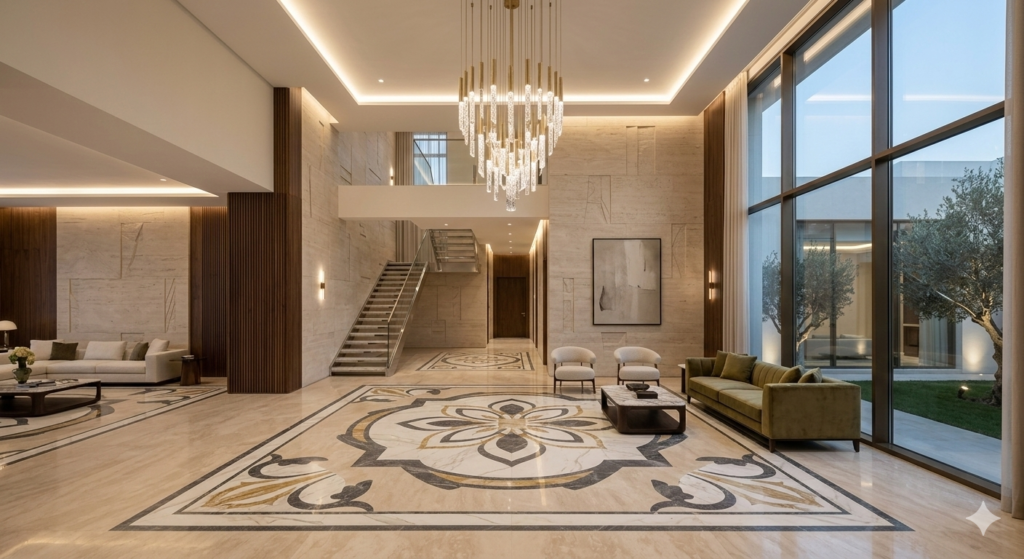
Natural stone can shape the entire feel of a hotel or commercial space. From an impressive hotel lobby to a refined restaurant, spa, or reception area, the right stone adds character, texture, and a sense of permanence. However, choosing stone for a commercial project involves more than selecting an attractive colour or pattern.
The material must suit the space, handle everyday use, meet safety requirements, and remain practical to maintain. Understanding these factors helps architects, interior designers, hotel owners, and developers select natural stone for luxury hotels and commercial interiors with greater confidence.
1. Start With the Purpose of the Space
Before comparing stone types, consider where the material will be installed and how people will use the area. A hotel lobby experiences different levels of foot traffic and wear than a guest bathroom or decorative feature wall.
For example, hotel lobby flooring needs to account for regular foot traffic, luggage movement, cleaning, and potential moisture near entrances. A reception desk may place greater emphasis on appearance, veining, and fabrication. Spa interiors often benefit from natural textures and calming colours.
Identify the main requirements first:
- Hotel lobbies and corridors: Durability, slip performance, ease of maintenance, and visual consistency.
- Reception desks and feature walls: Distinctive patterns, carefully planned slab layouts, and precise fabrication.
- Restaurants and bars: Resistance to staining, suitable finishes, and cleaning requirements.
- Bathrooms and spas: Moisture exposure, slip resistance, and appropriate surface treatments.
- Retail stores and office reception areas: A balance of appearance, foot traffic, and long-term maintenance.
This application-first approach makes it easier to identify the best natural stone for each part of a commercial property.
2. Compare Different Types of Natural Stone
Marble, granite, quartzite, limestone, and travertine each offer different visual qualities and performance characteristics. The right choice depends on the installation area, finish, expected use, and maintenance plan.
Marble: For Refined, Timeless Interiors
Marble is widely used in luxury hotels, reception areas, bathrooms, decorative walls, and statement flooring. Its natural veining and range of colours make it suitable for both classical and contemporary designs.
White marble can create a bright, open appearance, while darker varieties add contrast and depth. Bookmatched marble, where adjacent slabs are arranged to mirror their patterns, can also create a striking feature wall or reception backdrop.
However, marble can be sensitive to acidic substances and may show scratches or surface wear. In busy commercial areas, the selected variety, finish, cleaning routine, and maintenance expectations should be reviewed before installation.
Granite: For Hard-Wearing Commercial Applications
Granite is often considered for surfaces that need good resistance to everyday wear. Depending on the specific material and finish, it can be suitable for selected commercial floors, counters, and other frequently used surfaces.
Its appearance ranges from subtle, consistent patterns to more expressive mineral designs. This versatility allows designers to use granite in spaces where practical performance is as important as appearance.
The final specification should still account for slip resistance, the intended use, and the manufacturer’s care recommendations.
Quartzite: For Distinctive Statement Surfaces
Natural quartzite can be an appealing option for reception counters, bar fronts, feature walls, and selected high-end commercial surfaces. Some varieties feature dramatic veins and contrasting colours that make them natural focal points.
Quartzite is often considered when designers want an expressive stone surface without relying exclusively on marble. However, natural stone names and properties can vary, so the specific material should be verified before it is specified for a project.
Limestone and Travertine: For Warm, Understated Design
Limestone and travertine can introduce softer colours and a more relaxed architectural character. They are often considered for resorts, hospitality interiors, spa-inspired spaces, and projects that favour warm, natural finishes.
Their suitability depends on the stone’s properties, finish, filling, exposure, and maintenance requirements. Areas exposed to water or heavy traffic need particular attention during specification.
Also Read: Rajasthan’s Master Stone Artisans: The Art Behind Luxury Marble Inlay
3. Choose the Right Finish for Safety and Appearance
The finish affects how natural stone looks, feels, and performs. A polished surface reflects more light, while a honed finish has a smoother, less reflective appearance. Textured finishes provide a different tactile quality and may be appropriate for selected applications.
Polished finish: Often used for decorative walls, reception counters, and statement surfaces where colour and veining should stand out.
Honed finish: Offers a softer appearance for contemporary interiors, selected floors, bathrooms, and wall applications.
Textured finish: May suit certain entrance areas, outdoor spaces, and other locations where additional surface texture is desirable.
Do not assume that a particular finish is automatically slip-resistant. For hotel entrances, bathrooms, poolside areas, and other locations where floors may become wet, request suitable slip-resistance test information for the actual stone and finish.
The specification should meet applicable local building and accessibility requirements, particularly in public-facing commercial spaces.
4. Consider Durability and Long-Term Maintenance
One of the most important questions when choosing natural stone for commercial flooring is how the surface will perform after years of use.
A stone that looks impressive in a showroom may require more maintenance than the hotel operator expects. Cleaning products, foot traffic, spills, moisture, and the frequency of professional maintenance can all influence its appearance over time.
Before making a final selection, ask the supplier about:
- Water absorption and whether sealing is recommended.
- Resistance to abrasion and everyday wear.
- Sensitivity to acidic substances and common cleaning products.
- Suitable cleaning methods and maintenance intervals.
- Repair options if a section becomes damaged.
- Expected variation in colour, veining, and texture.
Use cleaning products recommended for the specific stone. Acidic cleaners can damage marble and other calcium-based stones, while unsuitable treatments may affect the finish of other materials.
For large hotel projects, maintenance planning should be considered during the design stage rather than after installation.
5. Match Stone Colours and Patterns With the Interior Design
Natural stone is formed through geological processes, so variations in colour, veining, and texture are part of its character. These differences can create visual interest, but they need to be considered carefully when planning a large commercial installation.
Neutral marble, limestone, or travertine can support a calm and cohesive interior. More expressive marble and quartzite can create focal points around reception desks, feature walls, and bars.
For a consistent design, establish a material hierarchy:
- Use a primary stone for large surfaces.
- Introduce a complementary material for secondary areas.
- Reserve distinctive patterns or decorative inlays for selected focal points.
For high-visibility installations, review the actual slabs before fabrication. This is particularly important when the design includes bookmatching, continuous veining, marble medallions, or bespoke inlay flooring.
6. Plan Slab Sizes, Fabrication, and Installation Early
Stone selection should happen alongside architectural planning. Slab dimensions, thickness, cut-outs, joints, edge details, and installation methods can influence both the final appearance and the overall project cost.
For example, a bookmatched feature wall requires the slab sequence to be planned before cutting. A custom marble inlay floor needs accurate pattern drawings and coordination between the design, fabrication, and installation teams.
Before approving an order, confirm:
- Slab dimensions, thickness, and available quantities.
- The layout and direction of natural veining.
- Edge profiles, joints, and cut-out positions.
- Fabrication tolerances and installation requirements.
- Replacement material availability where practical.
- Packaging, handling, and delivery arrangements.
For international hospitality projects, protective packaging, accurate labelling, inspection, and transport coordination are also important. Planning these details early helps reduce avoidable delays and damage.
7. Balance Design, Budget, and Lifecycle Cost
The purchase price is only one part of the cost of a natural stone installation. Fabrication, finishing, wastage, transport, installation, cleaning, and ongoing maintenance also contribute to the overall investment.
A more cost-effective design does not necessarily mean choosing the cheapest stone. It means selecting materials that meet the project’s visual and practical requirements without creating unnecessary maintenance or replacement costs.
For example, a distinctive stone may deliver more value when used on a reception desk or feature wall rather than across every surface. A more consistent material may be better suited to large floor areas where visual continuity and availability are priorities.
Request a detailed quotation that identifies the material, finish, dimensions, fabrication scope, packing, and delivery requirements. Comparing suppliers on the same specification makes it easier to evaluate the complete project cost.
Read Also: Luxury Natural Stone Surfaces: Marble, Onyx & Gemstone Design Ideas
Final Thoughts
Choosing the right natural stone for luxury hotels and commercial interiors requires a balance of design, durability, safety, maintenance, and project planning.
Marble can bring elegance to reception areas and decorative surfaces, granite may suit selected demanding applications, and quartzite can create distinctive architectural focal points. Limestone and travertine offer alternative ways to introduce warmth and natural texture.
The most effective approach is to select stone according to the needs of each space, verify its technical suitability, and plan fabrication and maintenance before installation begins.
For projects requiring custom marble inlay flooring, architectural stone surfaces, decorative panels, or bespoke stone features, AQJ EXPO offers stone solutions for hospitality and architectural interiors.
Frequently Asked Questions
1. What is the best natural stone for hotel lobby flooring?
The best option depends on foot traffic, the desired appearance, slip resistance, cleaning requirements, and maintenance budget. Marble, granite, travertine, and other suitable stones may be considered after reviewing the specific material and finish.
2. Is marble suitable for commercial interiors?
Yes. Marble can be used for reception areas, feature walls, bathrooms, decorative flooring, and other commercial applications. Its suitability depends on exposure, traffic, finish, and the maintenance programme.
3. Which natural stone is easiest to maintain in a hotel?
There is no single answer for every hotel. Some dense stones may be easier to maintain in particular applications, but performance depends on the stone’s properties, finish, exposure, and cleaning routine. Request care instructions before specifying a material.
4. What should architects check before ordering natural stone?
Architects should check material properties, finish, slab dimensions, colour variation, available quantities, fabrication details, installation requirements, maintenance guidance, and delivery arrangements. Reviewing actual slabs is especially useful for bookmatched surfaces and decorative inlay work.
5. How can natural stone make a commercial interior look more luxurious?
Natural stone can add depth, distinctive veining, texture, and a sense of permanence. Carefully selected marble, bookmatched slabs, bespoke inlay flooring, and decorative stone panels can create focal points while complementary materials maintain visual balance throughout the space.