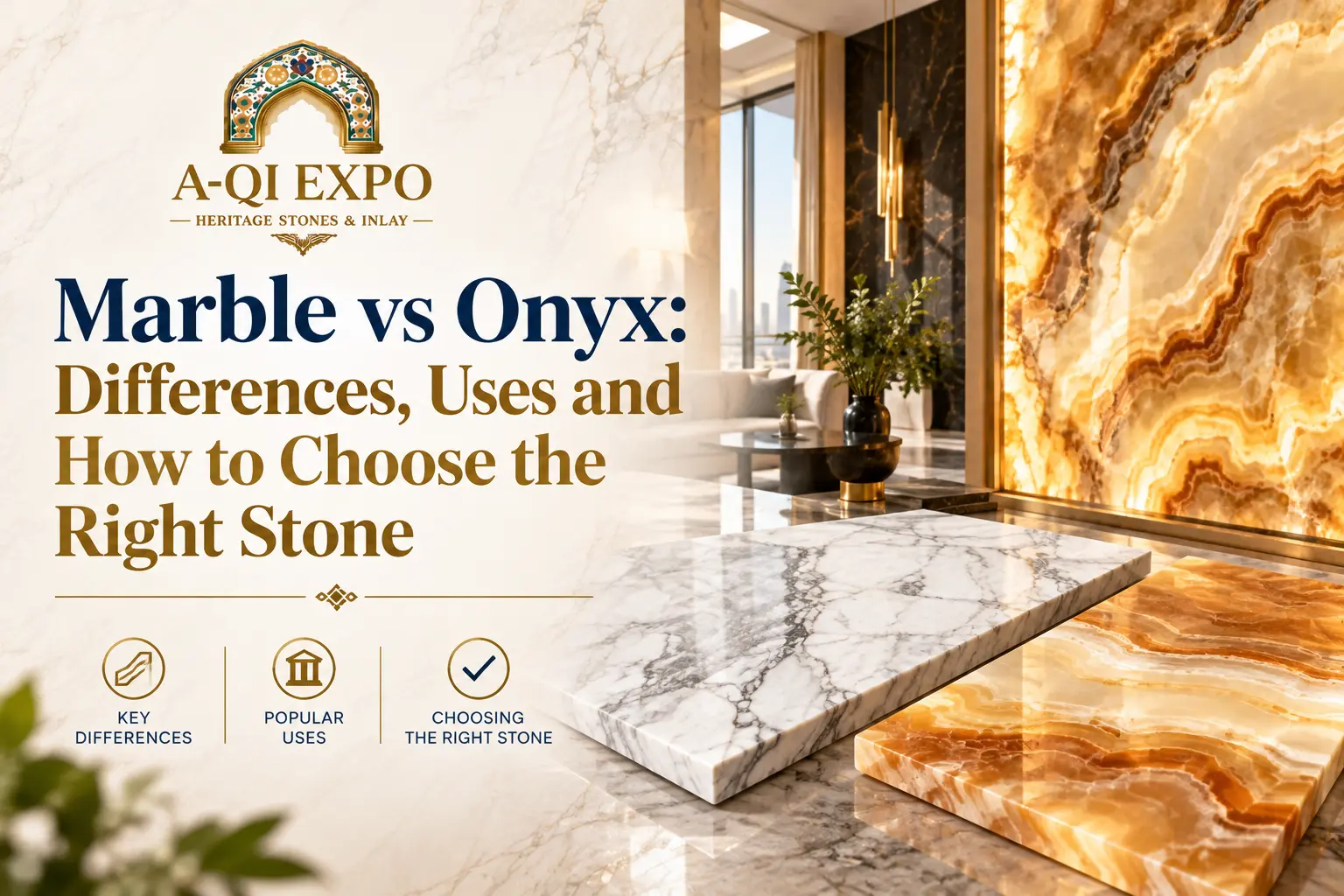
Marble and onyx are both popular choices for luxury interiors, but they create very different effects. Marble is known for its natural veining and timeless appearance, while onyx stands out for its layered patterns, rich colours, and ability to transmit light in suitable varieties.
If you are planning a luxury home, hotel, reception area, or commercial interior, choosing between these stones depends on more than appearance. Durability, maintenance, installation requirements, and the intended use of the surface also matter.
This guide explains the main differences between marble and onyx, where each stone works best, and how to select the right option for your project.
What Is Marble?
Marble is a natural stone formed when limestone changes under heat and pressure. It is widely used in architecture and interior design because of its distinctive veining, range of colours, and ability to take a polished or matte finish.
White, beige, grey, and green marble varieties can complement both traditional and contemporary interiors. Each slab has its own pattern, making natural marble suitable for projects that need an individual look.
Common applications include flooring, wall cladding, staircases, bathroom vanities, tables, and decorative architectural features.
For projects requiring intricate patterns, marble inlay work combines carefully shaped stone pieces to create floral designs, borders, geometric patterns, and decorative medallions.
What Is Onyx Stone?
Onyx used in architectural stonework usually refers to a translucent variety of calcite or aragonite stone. Mineral deposits create its characteristic bands of colour, which may include white, honey, amber, green, and other shades.
Its most distinctive feature is translucency. Selected onyx slabs allow light to pass through, making them suitable for backlit wall panels and decorative installations.
Onyx is often used in hotel lobbies, luxury lounges, reception desks, feature walls, and selected furniture applications. It is generally more delicate than marble, so it requires careful handling and thoughtful placement.
Marble vs Onyx: Key Differences
Although both materials are used in premium interiors, their appearance and practical requirements differ.
1. Appearance and Design
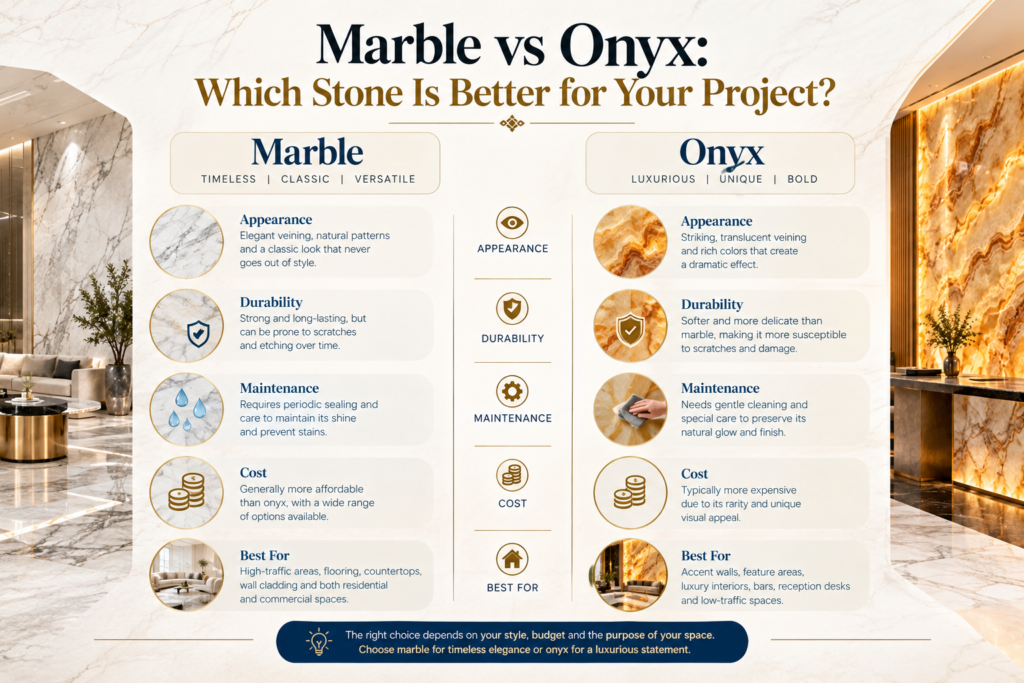
Marble usually has flowing veins, subtle colour variations, or bold natural patterns. It works well when you want an elegant surface that complements the rest of the interior without becoming the only focal point.
Onyx often has more pronounced colour bands and a translucent quality. When illuminated from behind, suitable varieties can create a glowing effect that makes the stone a central design feature.
Choose marble for a classic, versatile look. Consider onyx when you want a decorative surface with more visual drama.
2. Durability and Strength
Marble is generally the more practical choice for surfaces that experience regular use, including flooring, stairs, and some furniture tops. However, its performance depends on the stone variety, finish, installation, and maintenance.
Onyx is more susceptible to scratches, edge damage, and other physical wear. It is usually better suited to decorative applications and areas with limited contact.
Neither stone is completely resistant to damage. Both can react to acidic substances, so selecting the right finish and following proper care instructions are important.
3. Maintenance Requirements
Marble requires regular cleaning and may need periodic sealing, depending on the stone and its installation. Acidic products such as vinegar and lemon juice can damage its surface, particularly polished marble.
Onyx generally needs more careful handling because of its delicate structure. Spills should be cleaned promptly, harsh chemicals should be avoided, and the surface should be protected from impacts and abrasive materials.
For both stones, use a suitable pH-neutral cleaner and follow the supplier’s recommendations for sealing and maintenance.
4. Cost and Installation
The cost of marble and onyx depends on several factors, including rarity, colour, slab size, pattern, finish, fabrication, and transportation.
Premium marble can be expensive, while selected translucent onyx varieties may command higher prices because of their appearance, availability, and handling requirements. Neither material is always cheaper than the other.
Onyx installations may also require additional planning for lighting, backing, support, and fabrication. Request a project-specific quotation rather than comparing prices based only on the stone name.
Where Should You Use Marble?
Marble is a versatile option for many residential and commercial applications.
- Flooring: Suitable marble varieties can create an elegant appearance in living rooms, hotel corridors, and entrance areas.
- Wall cladding: Marble walls provide a refined finish in bedrooms, lobbies, and reception spaces.
- Bathrooms: Marble can be used for vanity tops, walls, and other selected surfaces with suitable sealing and care.
- Furniture: Marble tables and consoles introduce natural patterns into living and dining areas.
- Decorative inlay: Custom marble patterns add detail to floors, borders, and architectural features.
For areas with frequent use or moisture exposure, confirm that the selected marble, finish, and installation method are suitable for the conditions.
Where Should You Use Onyx?
Onyx is best considered for applications where its colour, pattern, and light-transmitting properties can be appreciated.
- Feature walls: Create a focal point in living rooms, lounges, and hotel interiors.
- Backlit panels: Highlight the natural bands of suitable translucent onyx.
- Reception desks: Add a distinctive stone feature to offices, hotels, and commercial spaces.
- Decorative furniture: Use onyx for selected tabletops, console details, and accent pieces.
- Hospitality interiors: Introduce a distinctive visual element into bars, lounges, and premium guest areas.
Onyx can be used for some vanity tops and other functional surfaces, but it needs additional care. It is generally not the first choice for busy kitchen countertops or high-traffic flooring.
Marble vs Onyx: Which Stone Is Better for Your Project?
The right material depends on your priorities.
Choose marble if you need a versatile natural stone for flooring, wall surfaces, or furniture that will experience regular use. It offers a broad range of colours and patterns and can complement many interior styles.
Choose onyx if your main goal is a decorative statement, especially where backlighting can highlight the stone’s natural translucency. It is particularly suitable for feature walls and selected low-wear applications.
You can also combine both materials. Marble flooring with an onyx feature panel, for example, can create visual balance by pairing a versatile surface with a striking decorative element.
Before making a final decision, review the actual slabs, confirm the installation requirements, and discuss maintenance with your stone supplier.
Why Consider AQJ EXPO for Natural Stone Projects?
AQJ EXPO offers natural stone and decorative surface solutions for residential, hospitality, and commercial interiors. Its range includes marble inlay work, gemstone panels, stone sculptures, and other architectural stone features.
Buyers, architects, and interior designers can review its stone sculptures and carvings and mother of pearl inlay designs for additional ideas involving natural materials and detailed craftsmanship.
When planning a project, discuss the intended application, dimensions, finish, material selection, and installation conditions before confirming an order.
Conclusion
Marble and onyx each have a distinct role in luxury interior design. Marble offers versatility and a timeless natural appearance, while onyx brings colour, translucency, and decorative impact.
Consider how the surface will be used, the level of maintenance you can manage, and the visual effect you want to achieve. With suitable material selection and professional installation, either stone can contribute to a well-planned interior.
Frequently Asked Questions
1. Is marble better than onyx?
Marble is generally more suitable for everyday surfaces such as flooring and selected furniture tops. Onyx is often preferred for decorative features and backlit panels. The better choice depends on the intended application.
2. Can onyx be used for flooring?
Onyx can be used in some light-use flooring applications, but it is vulnerable to scratches and damage. Marble is generally the more practical choice for areas with regular foot traffic.
3. Can marble and onyx both be used in bathrooms?
Yes. Both can be used for selected bathroom surfaces, provided the stone, finish, sealing, and installation are suitable. Onyx usually requires more careful handling and maintenance.
4. Is onyx more expensive than marble?
Not always. Prices depend on the stone variety, colour, quality, availability, slab dimensions, fabrication, and installation requirements. Premium onyx may cost more than some marble varieties.
5. Can onyx be backlit like gemstone panels?
Yes. Selected translucent onyx varieties can be illuminated from behind. The result depends on the slab’s translucency, thickness, backing, and lighting arrangement.